Local life · Saskatoon, Saskatchewan
Published
The fox on a Saskatoon bridge was a neighbour worth giving room
A fox on a snowy Saskatoon bridge drew affection, jokes and a more careful observation: its photographer said it was not using a back leg normally and had called wildlife help. The animal’s later condition is unknown. The encounter shows how an unexpected city sighting can be enjoyed without turning into an attempted rescue or a feeding stop.
Facts checked
In this story
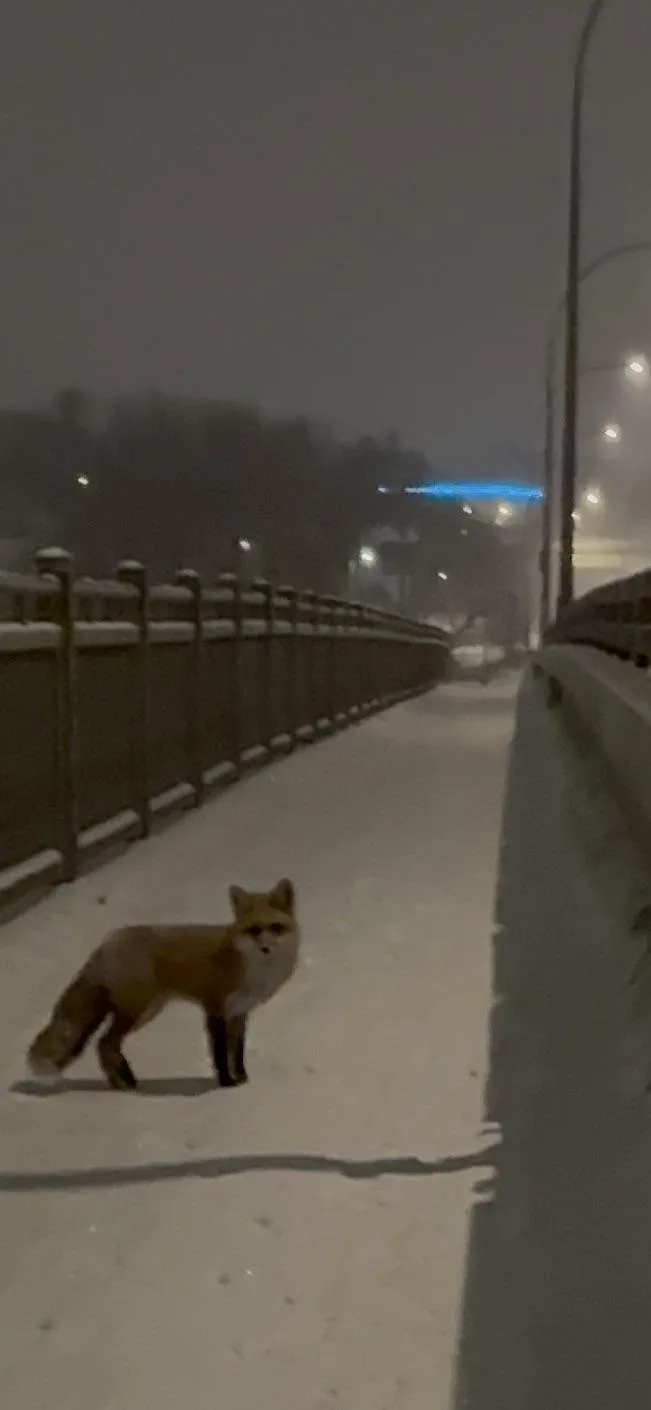
The photograph held more than a handsome fox
The fox was on a bridge in winter, a setting familiar to people crossing the river and momentarily occupied by someone else. A contributor identified the bridge as Sid Buckwold. It is an account from January, not an animal waiting there for visitors now.
Amid the affectionate jokes, the photographer noticed how it moved. Some contributors wondered whether snow had irritated a paw, but the photographer said the back leg was not being used while walking and help had been called. That observation matters more than deciding a diagnosis from the picture. The later outcome was not established.
Source: January 21, 2026: fox on the bridge
The city is not outside the natural world
Saskatoon lists foxes among its normal urban wildlife, alongside coyotes, jackrabbits, raccoons and geese. The bridge need not make the fox a lost visitor; it can simply be part of an animal’s route through a city people tend to think of as exclusively theirs.
Red foxes eat a varied diet, with small mammals important and insects or berries contributing seasonally. They mostly hunt around dusk, overnight and in the early morning. Local contributors also compared rabbit sightings, some seeing fewer and another still seeing plenty in Westview. Those differing glimpses are a reminder of how much can be happening beyond one person’s usual walk.
Source: Hinterland Who’s Who: red fox habitat, diet and behaviour
Source: City: coexisting with urban wildlife, May 12, 2026
Source: January 21, 2026: fox on the bridge
Admiration does not need an offering
The jokes included taking the fox home or paying it a food toll for the crossing. As jokes, they belong to the delight of seeing it. As plans, they would change a wild encounter into a problem. Saskatoon prohibits feeding wildlife on public and private property, because animals can learn to approach people for food.
Secure garbage, compost, birdseed and pet food, and keep pets from following wildlife. Distance protects the possibility of an ordinary sighting next time: an animal passing through, rather than one expecting a meal or facing a pursuing dog.
Source: City: coexisting with urban wildlife, May 12, 2026
Source: January 21, 2026: fox on the bridge
The useful part was the call
The city takes reports of unusual wildlife behaviour at 306-975-2476. Aggressive wildlife goes to the police non-emergency line, 306-975-8300; immediate danger belongs with 911. Describe the place, time and movement you observed, then follow the advice instead of surrounding or handling the animal.
This particular encounter has no confirmed happy ending to attach to it. It has something smaller and reliable: the photographer noticed a possible problem and asked for help without forcing a close encounter. The fox was allowed to remain a fox, even in a place people normally cross without looking for one.
Source: City: coexisting with urban wildlife, May 12, 2026
Source: January 21, 2026: fox on the bridge
Source: January 21, 2026: fox on the bridge
Questions people ask
Are foxes normal in Saskatoon?
Foxes are among the animals Saskatoon identifies as normal urban wildlife.
Source: City: coexisting with urban wildlife, May 12, 2026
When should I report unusual fox behaviour in Saskatoon?
Report unusual behaviour to city Customer Care rather than approaching the fox.
Source: City: coexisting with urban wildlife, May 12, 2026
What do red foxes eat?
Small mammals are an important food, with insects, berries and other items varying by season. Do not offer food to attract one.
Source: Hinterland Who’s Who: red fox habitat, diet and behaviour
When are foxes most likely to hunt?
Red foxes hunt mostly around sunset, during the night and in the early morning.
Source: Hinterland Who’s Who: red fox habitat, diet and behaviour
Should I approach a fox for a photograph?
Keep your distance and avoid blocking the fox or encouraging it to approach.
Source: City: coexisting with urban wildlife, May 12, 2026
Who takes reports of unusual wildlife behaviour?
Customer Care receives these reports at 306-975-2476.
Source: City: coexisting with urban wildlife, May 12, 2026
Who should I call about aggressive wildlife?
Report aggressive wildlife to police non-emergency at 306-975-8300.
Source: City: coexisting with urban wildlife, May 12, 2026
What if I am in immediate danger?
Call 911 if there is immediate danger.
Source: City: coexisting with urban wildlife, May 12, 2026
Should pets be allowed to follow the animal?
Keep pets supervised and controlled so they cannot follow or chase wildlife.
Source: City: coexisting with urban wildlife, May 12, 2026
How can I avoid encouraging foxes to approach my home?
Secure food sources and avoid offering food to wildlife.
Something changed? Tell us about a correction.